Fortín Tiburcio
Los pacientes del doctor GarcíaFortín Tiburcio is a small railway settlement in Buenos Aires Province whose surrounding estate becomes both Simona Gaitán’s prison and the setting of her release. Its distance from the city gives Renato Bley power over her daily life; years later, the home she inherits there becomes a refuge for her family when political danger threatens them.
Setting and isolation
The settlement grew around a railway stop on the banks of Arroyo Salado. Renato’s estate comprised several thousand hectares near Junín, where the sparse population and extensive land made him a local magnate. Simona arrived there newly married, frightened by the apparently boundless plain, the dirt streets and the wheat fields. The large, austere house, with bare walls and dark furniture, was already occupied by Renato’s sisters, Augusta and Salomé. They treated Simona coldly, while deferring to their brother.
For a time the estate seemed less forbidding. Renato was a considerate lover, gave Simona a mare, and she learned to ride, gradually growing fond of the landscape. But the sisters watched her closely and monitored her menstruation because she was not becoming pregnant. A doctor in Junín told her that Renato was sterile; when she disclosed this, Augusta insisted that the fault must be Simona’s. The open countryside offered no real freedom: the estate’s remoteness, Simona’s dependence on Renato, and the boundaries of its wire fence combined to keep her isolated.
Confinement and escape
As the marriage deteriorated, Renato’s violence and control made the estate a place of captivity. Simona’s mother sometimes traveled from Buenos Aires to visit, but Renato mistreated her and ultimately threw her out, threatening to kill both women if she returned. The gendarmes would not intervene, telling Simona’s mother that nothing could be done because Renato was her husband. Afterward, Salomé intercepted Simona’s family mail. On Simona’s twenty-eighth birthday, Renato told her she would never again set foot in Buenos Aires.
Simona secretly resolved not to spend her thirtieth birthday at Fortín Tiburcio, even if she had to die to prevent it. The thought of suicide briefly gave her strength, but also helped her recognize the mechanisms of her confinement: she was far from help, alone among people economically dependent on Renato, and hemmed in by an estate whose fences held her as well as its cattle. She began to plan an escape, though Renato rarely left her alone. He had killed her mare, she could not drive, and she slept in a locked room.
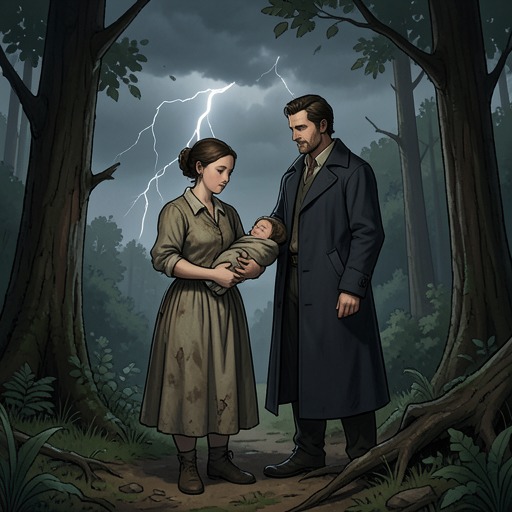
A prolonged storm finally broke that enclosure. After four days and three nights of rain, Arroyo Salado overflowed, joining the floodwaters into a vast expanse toward Mar Chiquita. Renato tried to rescue cattle and disappeared into the water. Simona heard him call for a rope and saw him swept away after the root he had grabbed broke. She did not save him, and the flood carried him off; his remains were recovered in pieces over the following days, with the skull found last and not conclusively identified.
Return and changed meaning
Once the water receded, Simona walked back without fear. She stopped to mourn her mother and to take in the sense of a world and a life opening again. Rather than return straight to the house, she went to Fortín Tiburcio to notify the gendarmes, who drove her back to the estate. She turned thirty in Buenos Aires. Renato’s authority ended with his death: Simona cut her hair so that no one could drag her by it again, inherited half the land and a substantial fortune, and eventually bought an apartment on Calle Rivadavia beside her mother’s building.
Many years later, Fortín Tiburcio had become a place Simona could choose to revisit. In November 1976, as Manuel Arroyo Benítez sought to move his family out of danger, he proposed taking them there under the pretense of a vacation and of putting the country house up for sale. Simona questioned the plan, and her sons resisted leaving Buenos Aires; nevertheless, the family traveled north. Their stay provided a cover for their movements while arrangements were made for passports and airline tickets. The place that had once trapped Simona thus became a temporary shelter she could enter and leave by choice, part of a family’s effort to escape a new threat.
A refuge revisited
By November 1976, Fortín Tiburcio had acquired a second, sharply different meaning. Manuel Arroyo Benítez proposed taking his family there under the cover of a vacation, while Simona would appear to be arranging the sale of the country house. The explanation was designed to make their departure from Buenos Aires look ordinary: the children had finished their examinations, Simona was supposedly grief-stricken over her daughter’s boyfriend, and she could tell anyone who asked that she had gone north to handle the property. Her sons objected—one still had examinations to take, and both had reasons to stay—but Manuel asked whether Simona wanted to disappear, then put the same question to the others. The estate’s isolation, once imposed on Simona, could now provide cover for a family trying to evade danger.
The plan also exposed what remained unresolved in Simona’s relationship with the place. She questioned why they should go there after years away and doubted that anyone would buy the house without its land. Yet its ownership gave her a practical reason to return, and the familiar story of a holiday and a possible sale offered a plausible disguise. On the day they left, Simona’s daughter warned her father that she would never forgive him; their son Guillermo stayed behind in Buenos Aires, and Juan blamed his sister during the drive. Simona alone agreed to walk with Manuel when they arrived. That was enough for the neighbors to hear that she was visiting with the children and intended to sell the house, while the family’s real purpose remained hidden.
The visit did not end the danger or settle the family’s departure. Charlie was still in hiding while his girlfriend’s father distributed passports and plane tickets, and Guillermo kept his own documents but again refused to leave Argentina. On December 28, the family returned to Buenos Aires for the last time. Simona required that they retain their other properties and permitted the rental of their Recoleta apartment, while Manuel arranged a power of attorney so her sister could manage the country house, the apartment, and the language academy’s income. Fortín Tiburcio was therefore not simply a recovered home: its country house became part of the family’s escape plan, while Simona’s attachment to what she had built in Buenos Aires made departure costly and contested.
Return and changed meaning
Once the floodwaters receded, Simona walked back without fear. She stopped to grieve for her mother and felt the world, the fields, and even her own chest grow larger around her. She did not go straight to the estate: she continued to Fortín Tiburcio to notify the gendarmes, who then drove her back. Renato’s remains emerged piecemeal over the following days; the skull was found last, reduced to bone, and the authorities could not be sure it was his. Simona turned thirty in Buenos Aires. His authority ended with his death: she cut her hair so no one could drag her by it again, inherited half the land and a substantial fortune, and later bought an apartment on Calle Rivadavia next to her mother’s building. The ranch that had enclosed her could no longer dictate where she lived.
Decades later, the country house acquired a different use. In November 1976, as Manuel Arroyo Benítez tried to move his family out of danger, he proposed taking them to Fortín Tiburcio under the appearance of a vacation and a possible sale of the house. Simona challenged the plan, and her sons resisted leaving Buenos Aires. Manuel framed the journey as an ordinary family visit: Simona could say she was upset about her daughter’s boyfriend and had gone north to deal with the property. He then asked whether she wanted to disappear, and put the question to the boys as well. The remoteness that had once enforced Simona’s isolation could now help conceal the family’s movements.
The return was not a simple homecoming. Simona doubted that anyone would buy the country house without its land, and the family’s departure was bitterly contested: her daughter warned Manuel she would never forgive him, Guillermo remained in Buenos Aires, and Juan blamed his sister during the drive. Simona alone agreed to walk with her husband on arrival. Their presence was enough for neighbors to hear that she was visiting with the children and intended to sell the house, giving the family’s movements a plausible explanation while the real purpose stayed hidden.
The visit did not resolve the danger or secure everyone’s departure. Charlie remained in hiding while his girlfriend’s father distributed passports and plane tickets; Guillermo kept his documents but again refused to leave Argentina. On December 28, the family returned to Buenos Aires for the last time. Simona insisted that they retain their other properties, though she agreed to rent out their Recoleta apartment. Manuel signed a power of attorney allowing her sister to manage the country house, the apartment, and the language academy’s income. Fortín Tiburcio had become both a shelter in an emergency and an asset bound up with the life Simona had made elsewhere: unlike the captivity of her first years there, this journey was temporary, purposeful, and chosen under pressure.